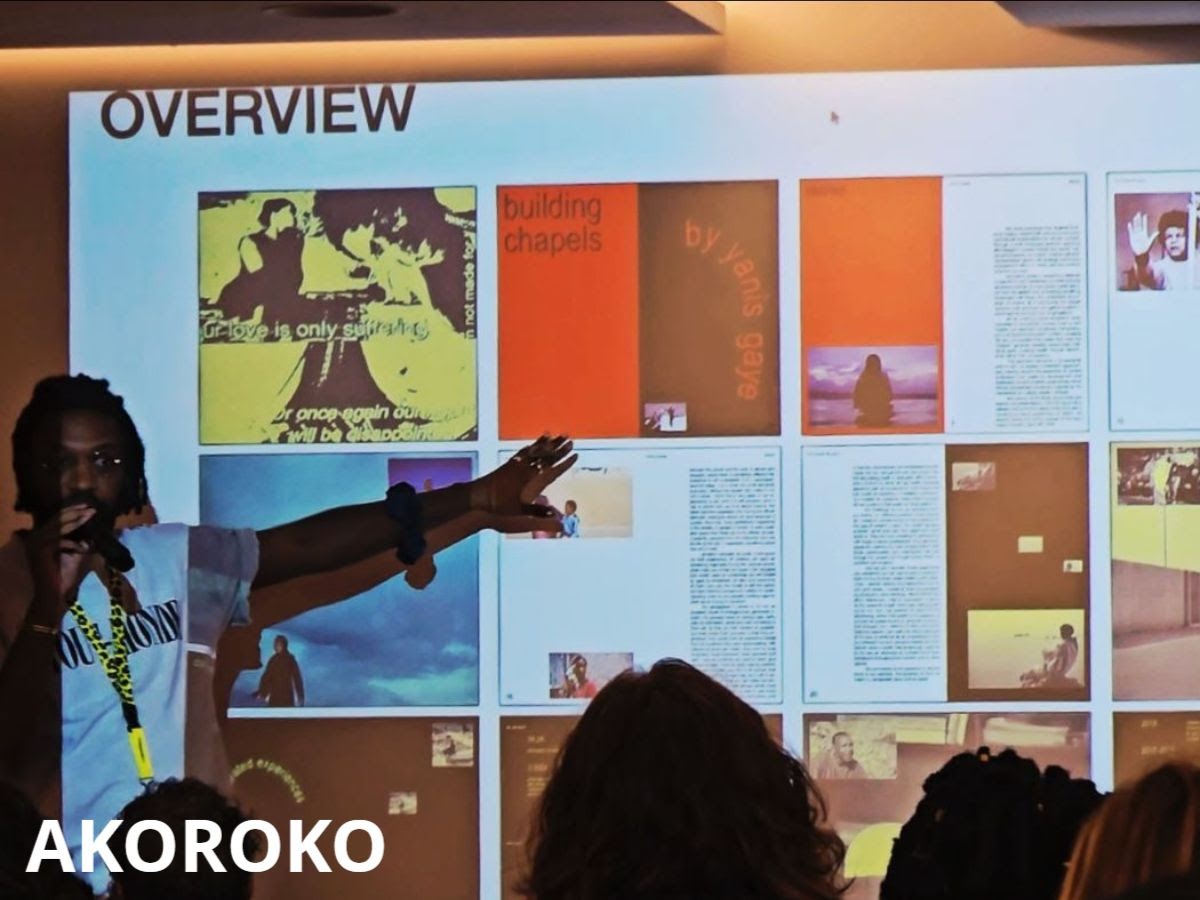
On Friday, May 15, the African & Diasporic Audience Development Think Tank convened a few dozen invited practitioners — including yours truly and my African Film Press (AFP) East Africa partner Jennifer Ochieng of Sinema Focus — at Canopy by Hilton in Cannes for two and a half hours of curated conversation across six thematic tables. The argument behind the convening — and behind the methodology the organizers have been developing since 2025 — is that the intelligence the African film economy needs about its audiences cannot be theorized from the outside or modeled from datasets that, for most of the continent, do not exist. It has to be generated by the people doing the work and compiled in public.
Yetu (Un)Limited initiated the Think Tank in 2025 and convened the first edition in Salvador, Bahia, with around 40 practitioners from across four continents, and eight case studies. This Cannes session — led by Yanis Gaye, co-curated with Kiasi, Ctrl + Alt + Shift, and Sanusi Development Studio under the new Nomadic Film Space platform — was the second iteration.
A publication from the inaugural edition in Brazil, with eight articles and four interviews, is in progress.
Each of the six thematic tables during the follow-up Cannes 2026 edition took a different cut at the audience question. Following is a compression of what each assessed and concluded:
Table 1 argued that any account of African theatrical viewership has to count the spaces conventional theatrical doesn't — the video halls in West Africa, the open-air screenings, the VJ-narrated screenings — and treat the heavy American share of African screens as a policy question, not a market given. The group proposed thinking in terms of "tentacles" of distribution that start within the continent and extend outward, with revenue streams beyond ticket sales: cinema advertising, product placement, and brand partnerships.
Table 2 took up the audience-first model, with Bethania Maia, curator at São Paulo's Instituto Nicho 54, presenting the work. Nicho 54 was founded in November 2019 by Fernanda Lomba, Heitor Augusto, and Raul Perez, based on the statistic that 54% of Brazil's population identifies as Black or pardo. In March 2026, Nicho 54 released "Cinemateca Negra," a publication mapping 1,104 films by Black Brazilian directors between 1949 and 2022. The same table referenced Spcine, the São Paulo municipal film company whose Circuito Spcine operates thirty-two public cinemas across the city, mostly in neighborhoods outside the commercial circuit. The UK Black-cinema distributor We Are Parable's basketball-court and community screenings, led by Carmen Thompson, head of distribution and special projects, also came up. Both were presented as case material for an audience-first methodology — event ecologies designed around the screening rather than after it — that the table argued draws audiences theatrical alone cannot reach.
Table 3, on impact distribution, made the case that impact campaigns concurrent with theatrical and festival releases drive demand into theaters. Documentary Africa (DocA) was in the room — Mohamed Saïd Ouma, the organization's Executive Director — alongside Bigger Motion, the pan-African distribution company that LBx Africa in Nairobi launched in October 2025, represented by Chloé Genga, its Head of Impact and Distribution. The group unpacked what it considered an asymmetry: most impact-distribution capacity in African cinema is concentrated in Anglophone hands, with very little in francophone Africa, where the campaigning culture has not yet developed despite a receptive audience. The rights problem: impact producers sign rights away to distributors who don't understand the territories where the impact happens, and training has to come before signature, not after.
Table 4 took on design and development — the proposition that audience design starts at the writing stage, is a reality for writers and directors as much as for producers, and benefits from an advisory committee that includes voices outside the film industry. Open-source documentation of what has worked and what has not was the table's methodological recommendation. The example was a broadcaster-platform commission in which, during the writing phase, the platform asked that two values be written into the script from the start: an influencer value and a product placement value.
Table 5, on financing, wrestled with a well-documented challenge: funding and audience are both on the continent, yet filmmakers still look north, and the rest of the ecosystem — sales agents, distributors, indie cinemas — is missing in most markets. The table challenged the framing of cinema as something governments subsidize and prompted a conversation about creative-economy GDP, citing South Africa, where the creative economy reportedly outperforms agriculture in GDP contribution yet receives less state support. Pan-African co-production was proposed as a discipline, alongside specificity about audience — language, segment, taste. The pitch was for private financing as a way to preserve a creative authority that public funding can compromise.
Table 6, where I sat, took on the digital space. African audiences are already inside platforms that African cinema did not create. The opening case study was Marodi TV, the Senegalese production company founded in 2012 by Serigne Massamba Ndour, with over 8 million YouTube subscribers and roughly 3 billion cumulative views across more than 600 hours of series content. Canal+ Group took a minority stake in Marodi TV in 2024; Ndour retains majority ownership and the CEO role, which makes the company a partial counterexample to the assumption that successful African digital-first IP automatically falls under foreign control. We also discussed the central data problem. African digital platforms do not publish their data. The reasons differ between founder-led and conglomerate-owned operators, but the result is the same: the audience-strategy work the Think Tank is trying to do cannot be designed in the absence of information. The Think Tank can compile practitioner methodologies. It cannot compile platform data that the platforms will not release.
The proposal Table 6 worked toward, which would address most, if not all, of these challenges, was a shared data infrastructure that does not yet exist.
Ultimately, the Think Tank, on this reading, is one half of a two-part problem. The qualitative side — methodology, case studies, audience design — is being organized by the practitioners themselves, as captured in rooms like these. The quantitative side — the platform data, the audience figures, the engagement numbers — is still locked behind walls that the practitioners have little leverage to open.
The bet is that the first creates the necessary pressure that will prompt the second to act.
The Brazil publication, when it lands, will be the African & Diasporic Audience Development Think Tank's first concrete output.
This report was first dispatched to Akoroko Premium Subscribers on May 16, 2026.