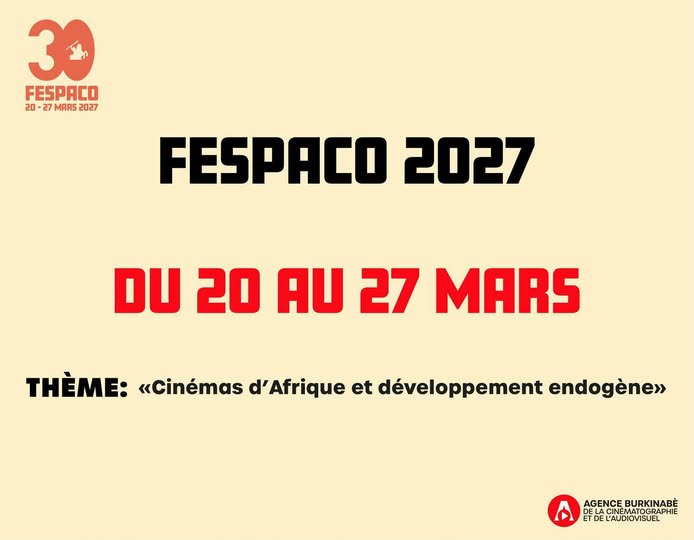
FESPACO's milestone 30th edition will now run March 20–27, 2027, in Ouagadougou, three weeks later than the festival's previously announced February 27 – March 6, 2027 window. The new dates and the edition's theme, Cinémas d'Afrique et développement endogène ("African Cinemas and Endogenous Development"), were announced after Burkina Faso's May 21, 2026, Council of Ministers, chaired by Burkina Faso Head of State, Captain Ibrahim Traoré.
The Council communiqué gave no public reason for the three-week move. One obvious explanation: Ramadan 2027 runs roughly from February 8 to March 8, with Eid al-Fitr around March 9–11. The previously published February 27 – March 6 window would have placed the festival within the final ten days of Ramadan — the most spiritually intense stretch of the month. The new March 20–27 dates fall about ten days after Eid. For a festival in a country roughly 60–65% Muslim, with substantial African and international Muslim attendance, that calendar arithmetic is hard to ignore.
The theme's reference to développement endogène — endogenous development — is not simply another term for self-reliance or local development. In Burkina Faso, it's closely associated with Joseph Ki-Zerbo, the Burkinabè historian and philosopher who argued that African development had to begin from African societies' own knowledge systems, languages, cultures, institutions, and resources.
For FESPACO, a pan-African event, adopting Cinémas d'Afrique et développement endogène as the theme for its 30th edition ties African cinema to both that intellectual history and the current political language of Captain Traoré's government. Essentially, how can African film industries finance, produce, train, distribute, exhibit, and circulate films with more African capital, infrastructure, languages, audiences, and institutions, even as many internationally visible African films still depend on European co-production money, European festivals, European sales systems, and European public funds?
The call for films for the festival's 30th edition opened on February 24, 2026, and closes on September 20, 2026.
The selection committee has 12 members, divided equally between women and men, from 11 countries, including Burkina Faso, Ghana, Zimbabwe, the Democratic Republic of Congo, Mozambique, Tunisia, Morocco, Brazil, and Comoros.