The Locarno Film Festival unveiled its 2026 Open Doors Screenings lineup on July 1, pairing eight features with five shorts pulled from across the African continent. Programmers Delphine Jeanneret and Ibee Ndaw said the selection weaves fiction, documentary, and hybrid work into one program, meant to feel like an open space for listening and exchange. The films run alongside Locarno's Pardi di Domani section during the festival's 79th edition, set for August 5–15.
This is the second year of Open Doors' four-edition focus on Africa, and the first time the AFP Critics Prize is part of the mix. The five short films below are the contenders — the winner gets a $500 cash award, a certificate, and ongoing coverage across Akoroko, Sinema Focus, and What Kept Me Up.
AFP Critics Prize Contenders — Short and Medium Films
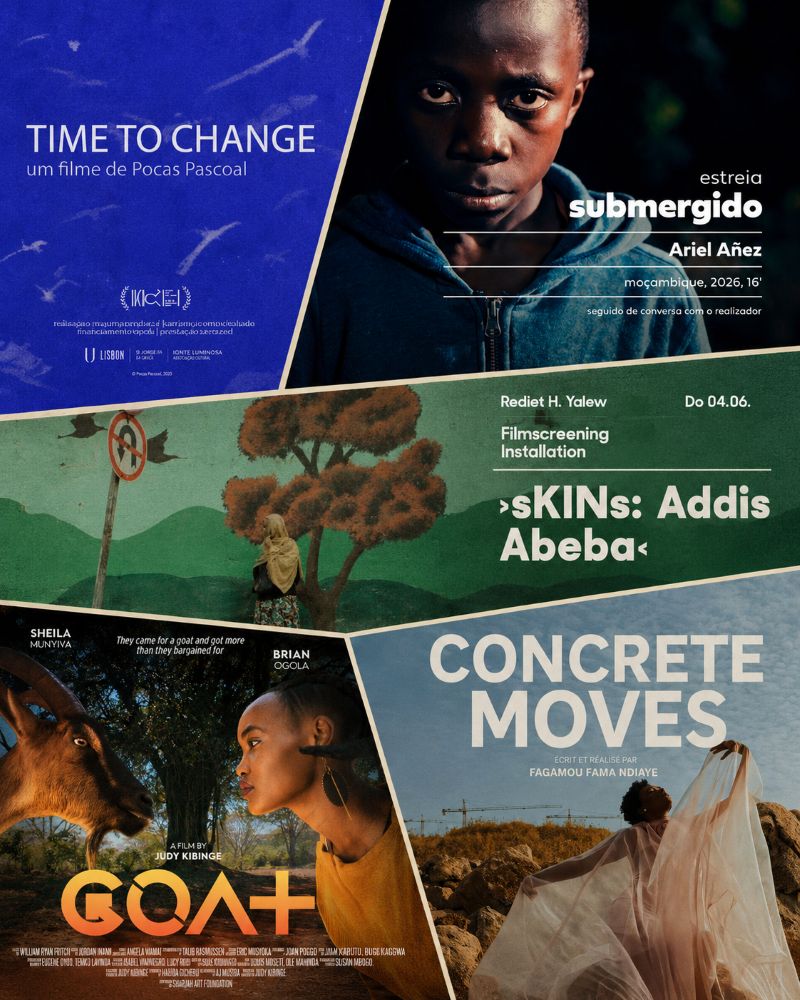
"Concrete Moves" — Fagamou Fama Ndiaye, Senegal, 2025, Swiss Premiere
Director Fagamou Fama Ndiaye returns to the hill above Dakar's Mamelles lighthouse where, as a child, a snake once frightened her on a school trip. Decades later she finds a coastline reshaped by construction. Using dance, archival footage, and the snake as a symbol for a shedding city, the film follows how concrete erases memory and nature over time.
"Goat" — Judy Kibinge, Kenya, 2025, Swiss Premiere
Kibinge's return to directing after more than a decade. City couple Suki and Benjamin head to a remote goat farm expecting a romantic getaway. Instead Suki finds herself facing an ancient Mugumo tree that's collecting on a debt she didn't know she owed. The film draws on pre-colonial Kenyan spiritual belief for its folk-horror frame.
"sKINs_Addis Abeba" — Rediet Haddis Yalew, Ethiopia, 2026, Swiss Premiere
An experimental documentary from visual artist and filmmaker Rediet Haddis Yalew, produced by Gebriel Blacha, that uses the body and the city of Addis Ababa as its lens for youth identity.
"Submergido" — Ariel Añez, Mozambique, 2025, Swiss Premiere
Amarildo disappears during fighting in Cabo Delgado, and rumors spread that he joined the insurgency. As his family absorbs the loss, his brother Sérgio starts to notice that Amarildo's ten-year-old son, Pércio, seems to share an unexplained bond with the missing father.
"Time to Change" — Pocas Pascoal, Portugal/Angola, 2024, Swiss Premiere
An experimental documentary from veteran Angolan director Pocas Pascoal that draws a line from colonial-era land exploitation and big-game hunting to today's environmental collapse, using archival footage from Portuguese colonial rule in Angola.
Features
"Barni" — Mohammed Sheikh, Somalia, 2025, Swiss Premiere
Mohammed Sheikh's debut feature. Nine-year-old Barni disappears from her village after a wedding celebration. Her older sister Amina and two friends travel to the city to find her, and the search becomes its own coming-of-age story for the trio. Shot in Djibouti with a mostly Somali cast, in a production that had to relocate out of Somalia itself.
"Catcher" ("Wrestlers") — Derhwa Kasunzu, Burkina Faso/France/DR Congo, 2025, Swiss Premiere
In Kisangani, a fallen catch-wrestling star named Nyawunyawu tries to organize a tournament honoring his late mentor, a former world champion who was buried with little recognition. The documentary follows the aging wrestlers as they train for one last match, weaving in family memories and archival footage of the mentor's career.
"Cotton Queen" — Suzannah Mirghani, Germany/France/Palestine/Egypt/Qatar/Saudi Arabia/Sudan, 2025
Sudan's first feature directed by a woman. Teenage Nafisa grows up on her grandmother's stories of fighting off British colonizers in their cotton-farming village. When a businessman arrives with genetically modified seeds and a marriage proposal, Nafisa becomes the center of a fight over the village's future. War forced production out of Sudan into Egypt, where much of the cast — many of them Sudanese refugees — rebuilt the village on set.
"Crocodile" — The Critics, Pietra Brettkelly, New Zealand/Nigeria, 2026, Swiss Premiere
Filmed over seven to thirteen years, this documentary follows The Critics, a Nigerian filmmaking collective from Kaduna who started making DIY sci-fi shorts as children on one of their father's phones. Brettkelly co-directs alongside the collective itself, tracking their growth from homemade green-screen productions to international recognition — including gear sent by J.J. Abrams and attention from Morgan Freeman — while the film doesn't shy from the tension and growing pains inside the group.
"Diya" — Achille Ronaimou, Chad/Germany/France/Ivory Coast, 2025, Swiss Premiere
NGO driver Dane accidentally kills a boy in a traffic accident in N'Djamena. Under Chadian custom, the boy's family can demand "diya" — blood money — or take a life in exchange. Dane and his pregnant wife travel into northern Chad trying to raise the payment, and the search uncovers more than they expected about how the accident happened.
"Katanga, la danse des scorpions" — Dani Kouyaté, Burkina Faso, 2025
Winner of the Étalon d'Or de Yennenga at FESPACO 2025. A Macbeth adaptation set in the fictional kingdom of Ganzurgu. Loyal military chief Katanga is told by a soothsayer that he's destined for the throne currently held by his cousin, King Pazouknaam. Pushed by his wife Pougnéré, Katanga acts on the prophecy, and the killing sets off a chain of violence that consumes the kingdom.
"La Kora de mon père" ("My Father's Kora") — Aymar Esse, Benin/Switzerland/Germany, 2026, World Premiere
A documentary built around a young Senegalese man whose father gave him a kora, the West African harp-lute. Director Aymar Ayéman Esse, who is Beninese-German, follows him as a way into questions of mixed identity — work that started as something Esse wanted his own daughters to have, to understand what it means to carry two heritages.
"O Profeta" ("The Prophet") — Ique Langa, Mozambique/Qatar/South Africa, 2026, Swiss Premiere
Shot in black and white over nine years in Manjacaze, the small southern Mozambican town where director Ique Langa's father was born. Pastor Hélder is well-liked by his shrinking congregation but privately doubts his own faith. He turns to a local witch for help, gaining healing powers and new followers — at a cost that keeps growing. The film premiered in Rotterdam's Tiger Competition earlier this year.
Open Doors runs August 5–10, inside the full festival's August 5–15 run. Locarno's main competition lineup gets announced at a press conference on July 9.