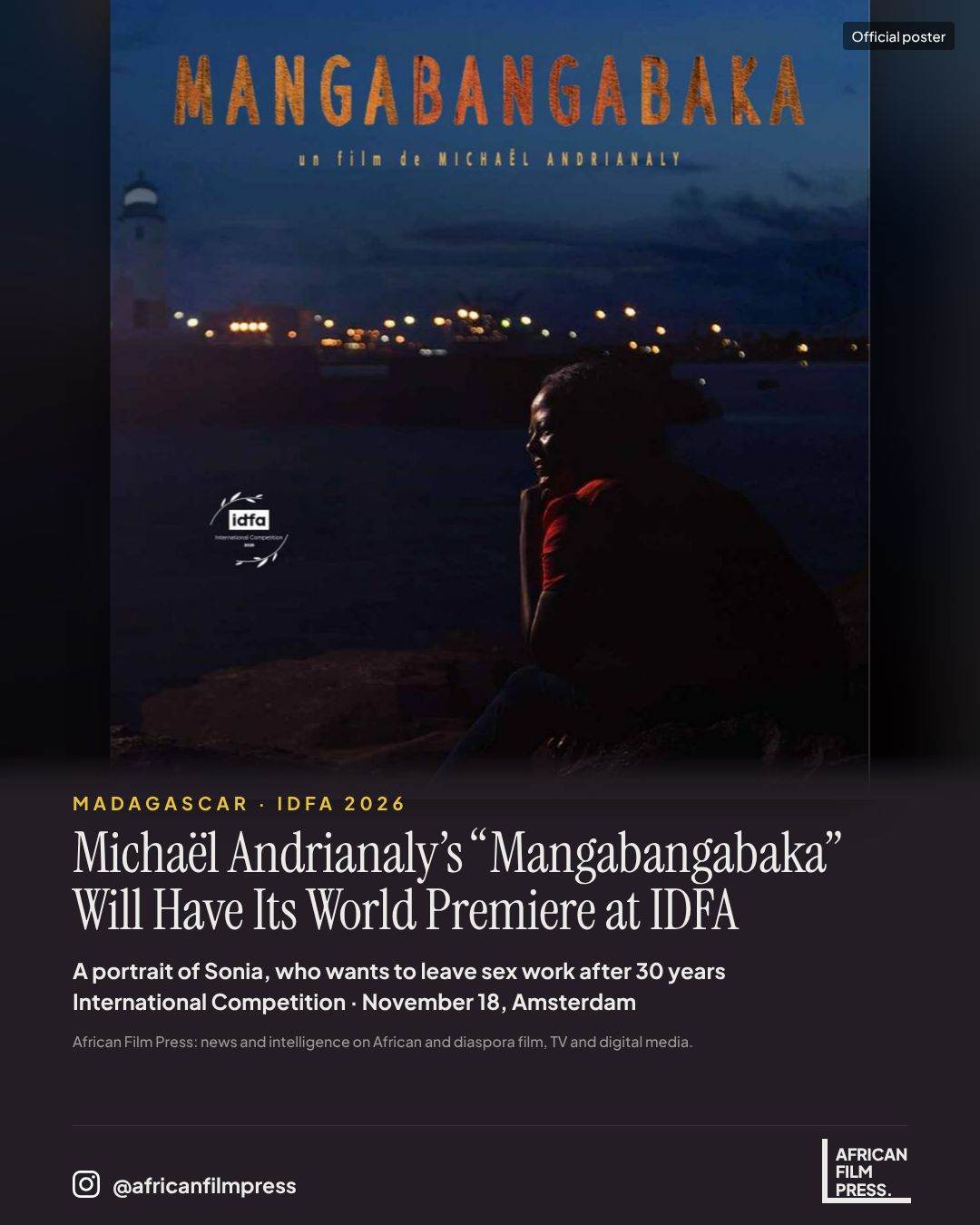
Malagasy filmmaker Michaël Andrianaly’s “Mangabangabaka” will have its world premiere at IDFA, the International Documentary Film Festival Amsterdam (November 12–22). The film is one of 13 titles in the International Competition.
It follows Sonia, 47, who has been a sex worker in Toamasina (Tamatave) since the age of 16. After 30 years on the streets, the mother of two wants to become a seamstress. With a state payment of 100,000 ariary (about €20) and money from selling her belongings, she buys a sewing machine. The first orders come in, but her debts pile up and the night keeps calling her back.
In Malagasy, “mangabangabaka” means complete emptiness.
According to the press kit, prostitution, officially banned in Madagascar, boomed in Toamasina when large international factories arrived in the 2000s. The same document says one in four women in the city has suffered physical or sexual violence.
“My filmmaking has become my way of activism,” says Andrianaly, who has been making films in Toamasina for about a decade. He notes that in Malagasy, the word for “country,” firenena, comes from reny, “mother.” His earlier work includes “Nofinofy” (2019), which won two awards at Cinéma du Réel and an Étoile de la Scam, and “Gwetto” (2023), selected for Visions du Réel. In 2024, the US festival True/False gave him its True Vision Award.
The film is a co-production between Les Films de la Pluie (France), Imasoa Film (Madagascar), Ana Films (France) and Pilumpiku Production (Burkina Faso).