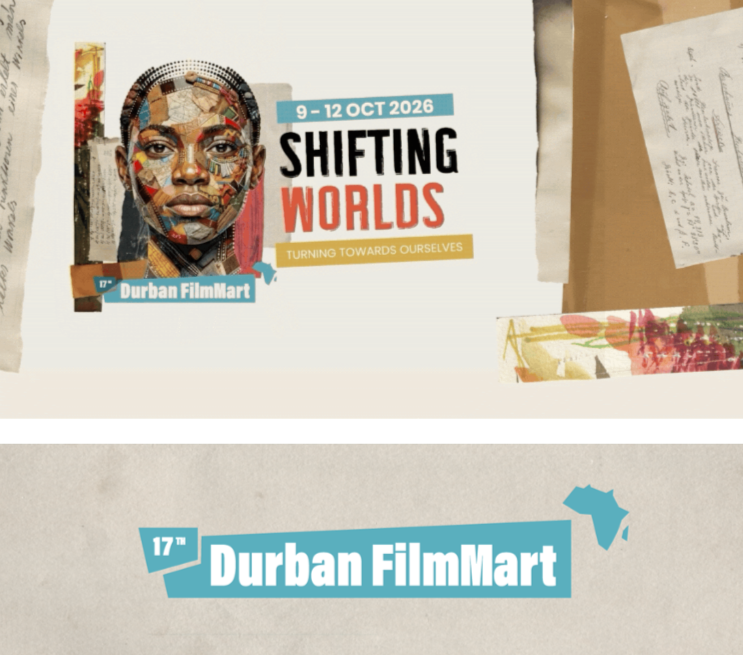
The Durban FilmMart Institute has moved the 17th edition of its annual market from July to 9–12 October 2026, citing funding challenges. The institute, a non-profit, says the viability of the July dates was considerably impacted by the global financial crisis affecting film and arts funding, major changes in key funding partnerships, and the ongoing reduction of local year-on-year funding opportunities — pressures that affect planning and strategic growth, not just one edition.
Director Magdalene Reddy stated: "Rescheduling the market has been a difficult decision, but one that the board and management had to take because we remain committed to the pan-African film ecosystem we serve. Despite the uncertainty we face with limited long-term, multi-year support for the annual event, we believe that the space we create for African film professionals must exist and that it is essential to those who believe in the power and impact of African independent film. We encourage all those who never miss a DFM to move with us and join us in October for what they have come to cherish."
The financial conditions Reddy describes are certainly not unique to the DFMI and have been documented across the global festival sector in recent years.
In 2024 (pre-Akoroko Premium), I covered the UK's Independent Cinema Office (ICO) survey of 49 film festivals from around the world for its "Financial Health of Global Film Festivals" report. Results presented at the International Film Festival Network summit at New Horizons Film Festival in Poland in July 2024 found that 85% of respondents needed further public funding to stay operational; 37% said they could continue operating for a year or less under current conditions; 69% cited rising costs as their main worry; and 25% had made redundancies in the past three years.
A few notable announced adjustments have included:
- In Toronto, Canada, Hot Docs faced near-collapse in 2024. Ten programmers exited weeks before the April festival; president Marie Nelson sought emergency support and warned the 2024 edition could be the festival's last; the federal Canadian budget tabled on 16 April excluded the festival entirely; the flagship Hot Docs Ted Rogers Cinema temporarily closed; and Nelson resigned in July 2024.
The 2025 edition went ahead with a 14% spending reduction, around CAD $1.6 million in cuts, and a programme of 113 features — down from 168 in 2024 and 214 in 2023.
The Toronto International Film Festival (TIFF) lost its longtime sponsor, Bell, at the end of 2023 and laid off 12 full-time staff in December 2023; the federal Canadian budget tabled in April 2024 allocated CAD $23 million over three years to TIFF for the launch of a new content market in 2026.
London Screenings, the UK's 21-year-old international showcase, will not return after its 2025 edition following the BFI's withdrawal of its £80,000 contribution under the new 2026–29 UK Focus Fund.
Locarno's Open Doors talent-development programme lost 25% of its Swiss government funding from 2025; the funding line is being phased out and will end entirely by 2029 as part of Switzerland's wider cultural reductions, with Visions du Réel also affected.
Rotterdam secured a four-year settlement covering its 2026–29 editions, though Dutch foundations now face heavier application loads because of government and municipal funding reductions across the Netherlands.
And others...
In a May 2024 survey of the wider picture, Deadline named festivals seeing what it described as flashpoints or upheaval: Sundance, Berlin, Hot Docs, Thessaloniki, IDFA, El Gouna, Cairo, Busan, and Odessa, among others. The disruption appears to have continued into 2026.
A More Crowded Q4 Calendar for African Industry Events
Durban FilmMart's move joins an increasingly crowded late-year calendar for African film festivals, content markets, and project-development activity. The 2026 edition is now scheduled for 9–12 October.
One week later, the El Gouna Film Festival in Egypt opens its 2026 edition, running 15–23 October.
MIP Africa, the film, television, and digital content market within FAME Week Africa in Cape Town, South Africa, runs 28–30 October.
AFRIFF, the Africa International Film Festival in Lagos, Nigeria, lists 1–7 November for its 2026 edition.
Marrakech International Film Festival in Morocco is scheduled for 20–28 November, with its Atlas Workshops industry program.
Mashariki African Film Festival in Kigali, Rwanda, is listed for 23–29 November, with MashaRket operating as its Kigali International Content Market.
S16 (Surreal16) Film Festival in Lagos, Nigeria, is set for 3–6 December with plans for more formal market-related events.
The JCC, the Journées Cinématographiques de Carthage, the long-running Arab and African cinema festival held in Tunis, Tunisia, is part of the late-year African festival calendar, usually unfolding in mid-December. Its 2026 dates have yet to be announced.
Finally, the Red Sea International Film Festival in Jeddah, Saudi Arabia, which runs 3–12 December and continues to attract African participation via the Red Sea Fund's financing and project development cycles for Arab, African, and Asian filmmakers.
Programming for the rescheduled Durban FilmMart continues as planned: the Pitch and Finance Forum for live action fiction, documentary, and animation; Talents Durban; and the Industry Programme of panels, masterclasses, and think tanks.
The 2026 theme is "Shifting Worlds: Turning Towards Ourselves," which the institute attributes to Ousmane Sembène: "Why be a sunflower and turn toward the sun? I, myself, am the sun." Sessions will cover alternative funding, distribution models, equitable co-production, and partnerships.
Delegate registration and full programme details will be announced in due course.